How to Write an Etsy Product Description: What Goes Where
How to write an Etsy product description in the order Etsy suggests: the first sentence, the details buyers ask about, the layout, and where the story goes.
By HolgoPublished
Most Etsy descriptions are written in the order the seller thinks of things: a welcome, the story of the shop, then, somewhere near the bottom, how big the item is. Buyers read in the opposite order. They want to know what it is and whether it fits, and they decide in the first few lines.
Etsy's own seller guidance says the same thing, in some detail. This guide follows it: what goes in the first sentence, what comes next, how to lay it out, and where the story belongs.
Does Etsy search read the description?
It does. Etsy's Keywords 101 guide, as updated in August 2025, says Etsy search considers the keywords and phrases in your listing description when it ranks listings. Its advice is to work your most relevant keywords into the first few sentences, without copying your title word for word and without simply listing keywords. Etsy asks for a sentence or two that sounds human and fits your brand's voice.
We used to get this wrong. Our descriptions once opened with the same phrase three different ways, and they read like spam. One clear sentence that happens to contain the words a buyer would search does more than a row of them.
The first sentence
Etsy's help page on SEO for shop and listing pages sets the test: describe the item clearly in the first sentence, so that a person can read it and know exactly what you are selling.
Ours now answers three questions: what it is, how big it is, and what it is for.
An opening that fails the test:
Welcome to my shop! Everything here is made with love in my home studio.One that passes:
Handmade glazed ceramic mug, holds about 12 oz, made for your everyday coffee.The second one also carries the words a buyer would type (handmade ceramic mug) without repeating them.
What buyers need next
After the first sentence, Etsy's help page says to go deeper: the variations you offer, such as materials and colors, any personalization options, and what makes the item unique. Its seller handbook article on the anatomy of a listing adds a list: dimensions, materials, care instructions and customization options, with the essentials at the top.
From our own shop, selling on Etsy since 2012, three of those deserve more care than they usually get.
Size. It is the question buyers ask us most. Give inches and centimeters, because buyers in other countries will ask, and add something familiar to compare it to. Say what you measured, too. We once wrote only 18 inches, and buyers kept writing in to ask what exactly was 18 inches.
Color. One of our items looked warm oatmeal under indoor light and was really a cool gray. The description just said natural. A buyer returned it and left an unhappy review. That description now says how the color really looks, and a daylight photo next to plain white paper backs it up.
Care. Buyers rarely ask about it before they buy. It is also the detail that becomes a bad review after something shrinks in the wash.
Be exact about materials as well. The Keywords 101 guide says the descriptors in your titles, descriptions and tags must be accurate, and that Etsy prohibits presenting an item in a way that may mislead buyers. Its example: do not call something cashmere if it is not.
How it should look
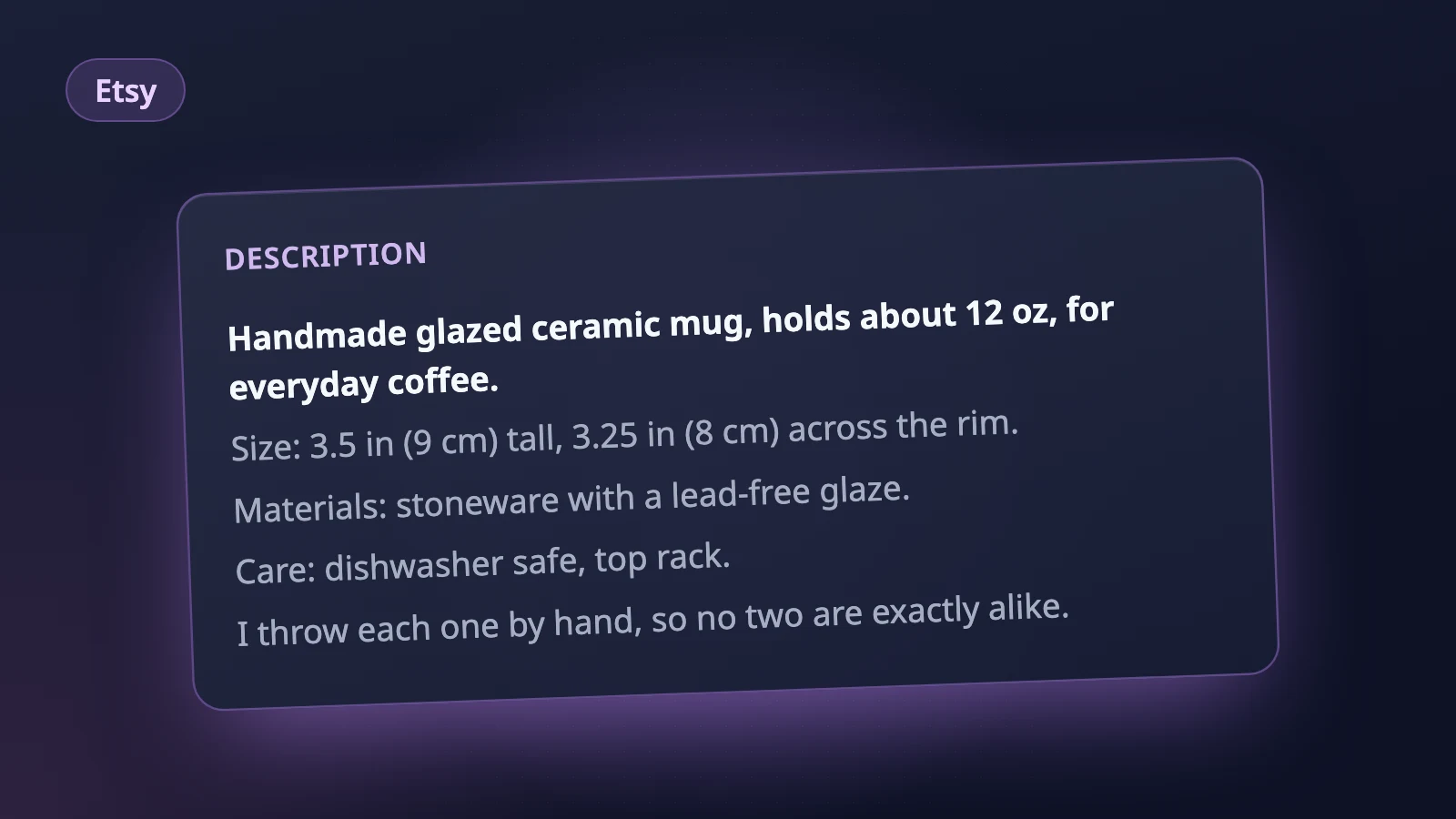
The same handbook article suggests bullet points or short paragraphs, because a long block of text is hard to digest. In practice that means a few short sections with a plain label each, so a buyer can jump to the one thing they came for:
Handmade glazed ceramic mug, holds about 12 oz, made for your everyday coffee.

DETAILS
- 3.5 in (9 cm) tall, 3.25 in (8 cm) across the rim
- Speckled cream glaze, darker at the base

MATERIALS
- Stoneware with a lead-free glaze

CARE
- Dishwasher safe, top rack
- Microwave safe

I throw each mug by hand, so no two are exactly alike.
Read it on a phone before you publish. If the size is not on the first screen, move it up.
Where the story goes
Last. Etsy's anatomy article says to keep the essential information at the top and to end on your product's story. Its five tips for writing descriptions call this the inverted pyramid: the most important information first.
We used to do the reverse: three or four paragraphs about how we got started and what inspired the piece, before a single measurement. Those listings drew far more basic questions than the rest. With the story cut to a sentence or two at the end, we get far fewer of them.
Two more suggestions from the same Etsy article:
- If you make everything yourself, write in the first person: I, not we.
- Etsy links pasted into a description work as links, so end with one to a related section of your shop or a matching listing.
A checklist before you publish
- The first sentence says what it is, how big it is and what it is for.
- Size is in inches and centimeters, and says what was measured.
- Materials, color and care are stated plainly and accurately.
- The details are in short sections a buyer can scan on a phone.
- The story comes last, followed by a link to more of your shop.
Where Holgo fits
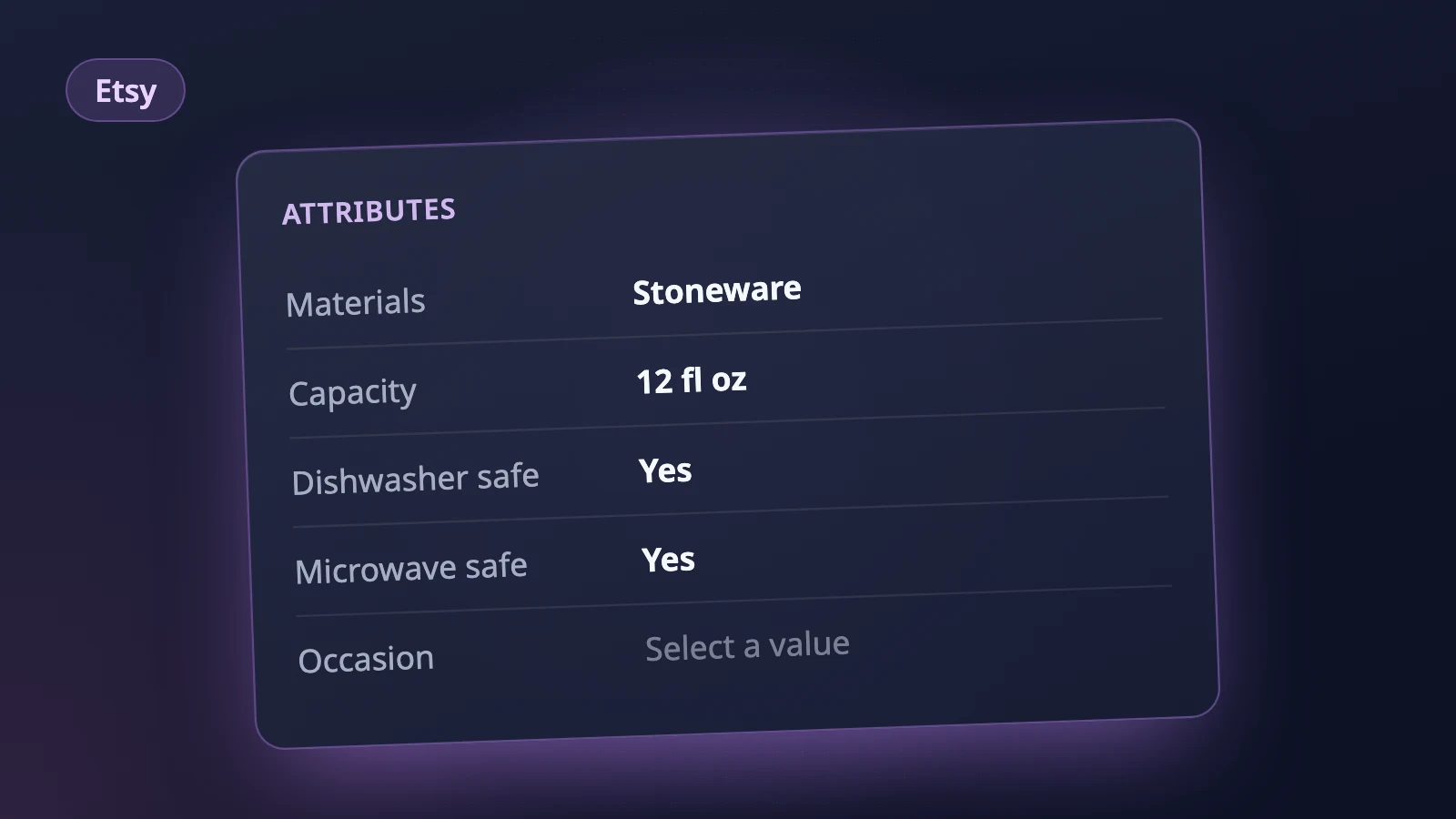
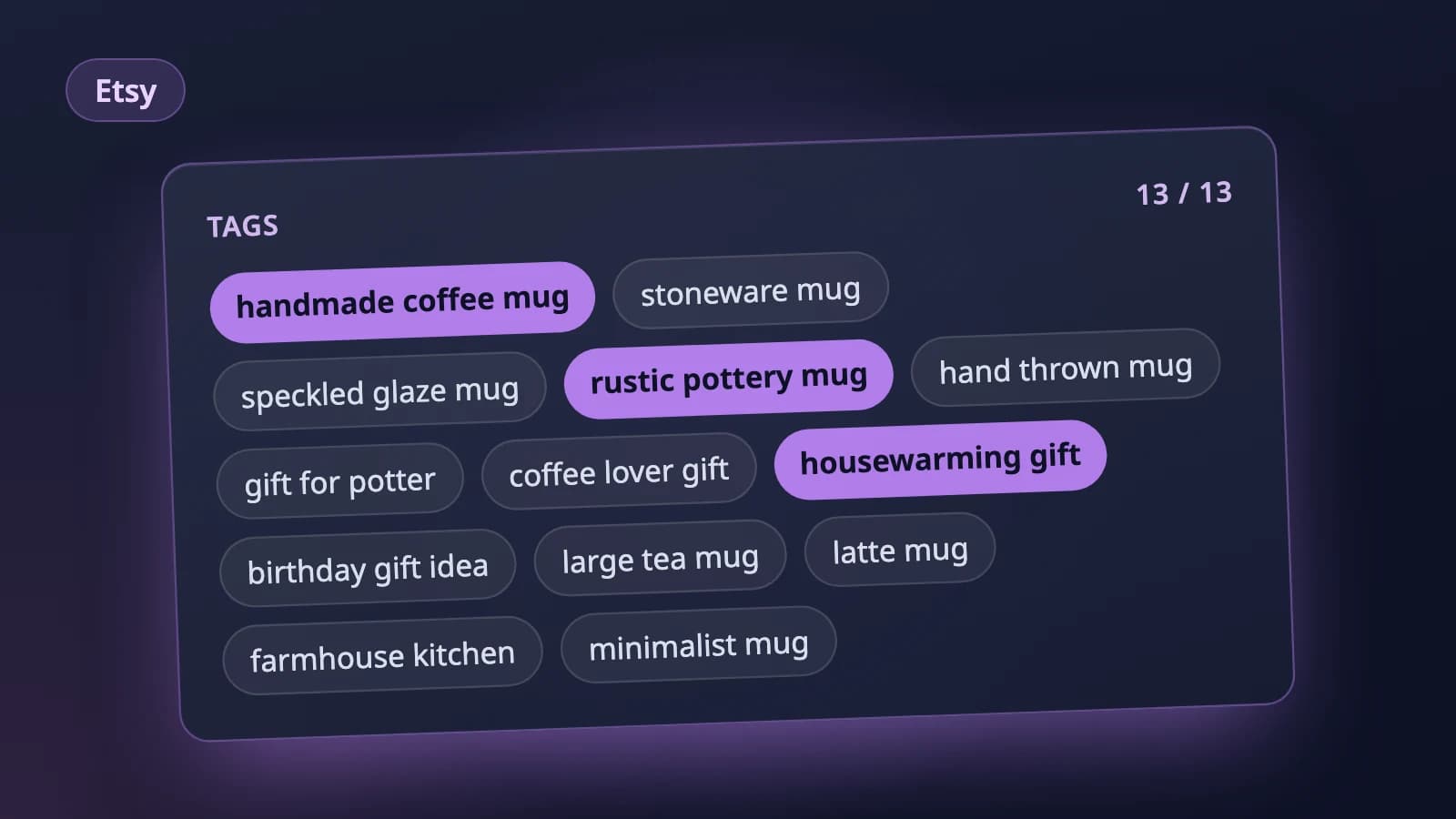
Holgo's Etsy listing AI writes the description in this order: plain text in sections for details, materials and care. When no measurements are known, it asks you to add them instead of saying see photos, so the size ends up near the top where buyers look for it. Like the title and the tags, the description is a first draft, and every word is yours to change before the listing goes anywhere. For the rest of the form, see our guides to Etsy tags and Etsy attributes.
Let Holgo write the first draft
Upload photos of an item and Holgo writes the title, description and the details Etsy asks for. Free credits to start, no store connection and no card.
Sources
The marketplace rules in this guide come from these pages.