How to Measure Clothes for Poshmark (and Photograph the Tape)
Which measurements to take for tops, bottoms, bags and shoes on Poshmark, how to write them in the description, and how to photograph the tape.
By HolgoPublished
A size tag tells a buyer what the brand called the item. It does not tell them whether a size M from one brand fits like a size M from another, or whether a pair of jeans has shrunk after years in the wash. Measurements do, and on Poshmark they are the detail that lets a buyer decide without asking you first.
Poshmark's own how to list article asks sellers to include measurements in the description, alongside condition, fabric content and date codes. Its steps to a perfect listing puts it plainly: measure the item so you can let buyers know how it might fit them, and be clear about size and fit. This guide covers which measurements to take, how to take them, how to write them, and how to photograph the tape.
What you need
- A soft tape measure (a sewing tape, not a metal one; it follows the fabric).
- A flat, clear surface: a bed, a table, the floor.
- Good light, if you are photographing the tape.
Lay the item face up, button or zip it closed, and smooth it without stretching. Stretching knit fabric while you measure adds an inch you will hear about later.
Which measurements to take
Poshmark published a short measuring tip on its blog some years ago, and it is still the clearest starting point. The points below follow it, with a note on what each one tells a buyer.
Tops, sweaters, jackets and dresses
- Bust (pit to pit): straight across the chest, from armpit to armpit. The single most useful number for a top.
- Length: from the top of the shoulder, next to the collar, down to the bottom hem.
- Sleeve: from the top of the shoulder down to the end of the sleeve.
For a dress, the shoulder-to-hem length is what tells a buyer whether it lands above or below the knee.
Pants, jeans, shorts and skirts
- Waist: straight across the top of the waistband, closed.
- Inseam: from the crotch seam down to the hem, along the inside of the leg.
Rise and leg opening are worth adding for jeans, since they decide the fit as much as the waist does. Skirt length runs from the top of the waistband to the hem.
Bags
- Height: from the base to the top of the bag (not counting the strap).
- Length: left to right along the base.
- Width: the depth of either side.
Strap drop, from the top of the strap to the top of the bag, answers the "does it fit over my shoulder" question.
Shoes, watches and bangles
- Heels: heel height from the base of the heel to its tip.
- Flats: the sole; heels: the insole. Either is a better guide to true size than the number stamped inside.
- Bangles and watches: the interior circumference, which is what has to fit the wrist.
Flat or doubled? Say which
A flat measurement across a top or a waistband is half the circumference. Some sellers double it, some do not, and buyers cannot tell which unless you say. Poshmark's measuring tips don't say which to use, so the safe habit is to write the word flat next to the number every time: "pit to pit 20.5 in, measured flat". A buyer can double it themselves.
In our own clothing listings, selling since 2012, we write flat measurements, because they are the more direct number to use: a buyer can lay a shirt they already own on the bed, run a tape across it the same way, and compare the two directly. A doubled figure has to be halved again before it means anything.
Writing measurements in the description
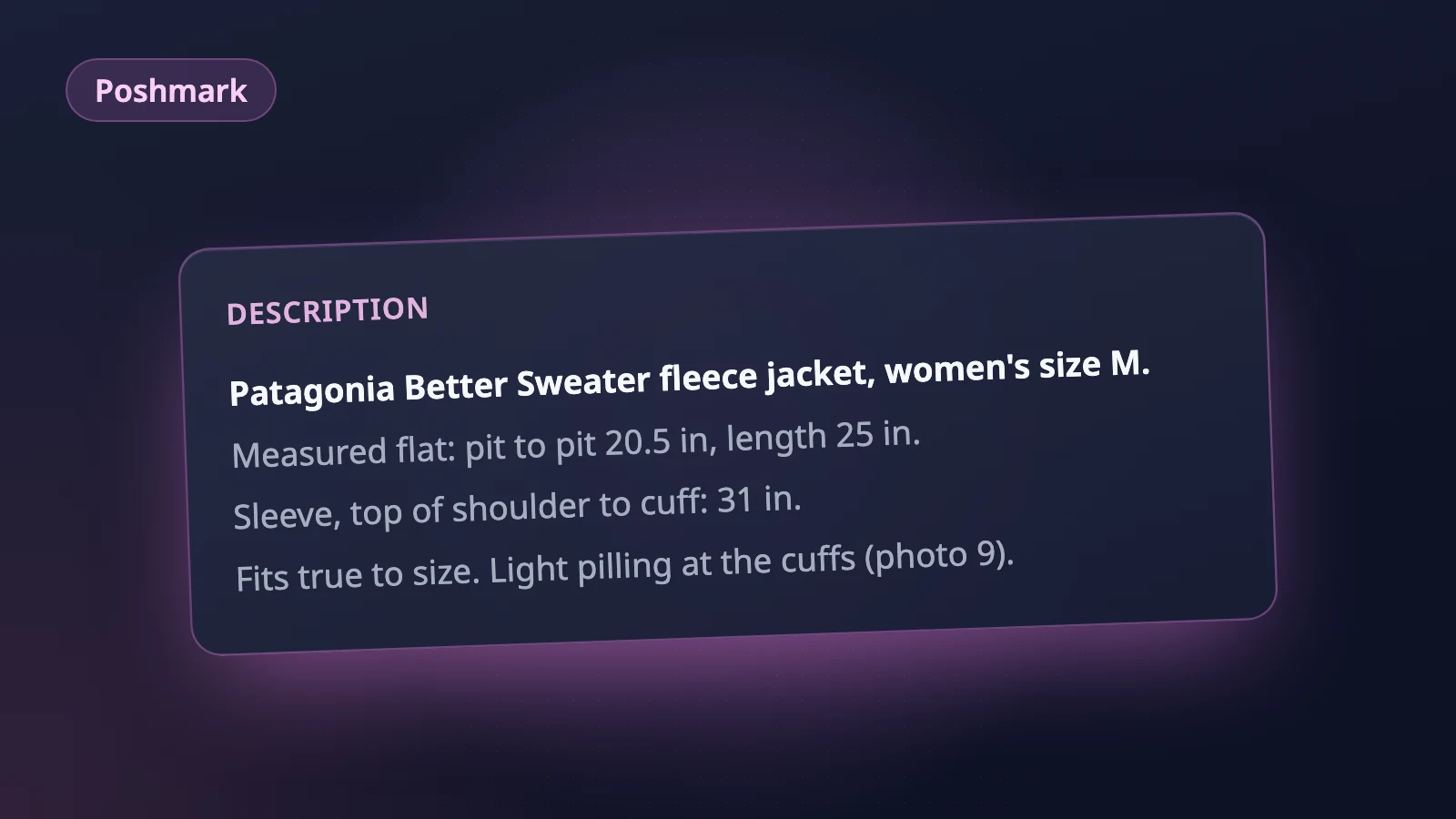
Put measurements in their own short block so they are easy to find on a phone, right after the line that says what the item is:
Patagonia Better Sweater fleece jacket, women's size M, in Stone Blue.

Measured flat:
Pit to pit 20.5 in
Length (shoulder to hem) 25 in
Sleeve (shoulder to cuff) 31 in

Fits true to size. Light pilling at the cuffs, see photo 9.
Two habits help:
- Name the start and end point for any measurement that could be taken more than one way (length from the shoulder or from the back of the collar?).
- Say how it fits. An older post on Poshmark's blog about descriptions advises mentioning when an item runs smaller or larger than the size on its tag, since buyers compare your numbers with their own body or with clothes they already own.
Photographing the tape
Poshmark allows up to 16 photos a listing, so there is room for a few measurement shots after the cover, back, labels and flaws (more on the full set in our guide to listing photos).
Pick the two or three measurements a buyer of that item will care about most and give each one its own shot. For a pair of pants, we photograph the waist, the length and the leg opening.
- Across the item (pit to pit, waist, leg opening): lay the tape across so both ends of the tape and the number are in frame. Shoot from directly above, not at an angle, or the numbers foreshorten.
- Along the item (length, inseam): one shot along the full measurement, with the tape's starting end visible.
- Keep the number readable. Get close enough that the reading is legible on a phone screen, and make sure the start of the tape sits exactly at the seam.
A photo does not replace the written number; it backs it up. Buyers scrolling the description should get the measurements without opening a single photo. The photo still earns its place, though: when we have forgotten to include a shot of the tape laid across the flat garment, buyers have messaged to ask about the measurements. It hasn't cost us a return, but it leaves the buyer waiting on a reply before they decide.
A checklist before you list
- Item lies flat, closed, unstretched.
- Bust, length and sleeve for tops; waist and inseam for bottoms; height, length and width for bags.
- Every measurement says where it starts and ends.
- Flat measurements are marked "flat".
- The description says whether it fits true to size, small or large.
- A clear tape photo for each of the two or three measurements buyers care about most.
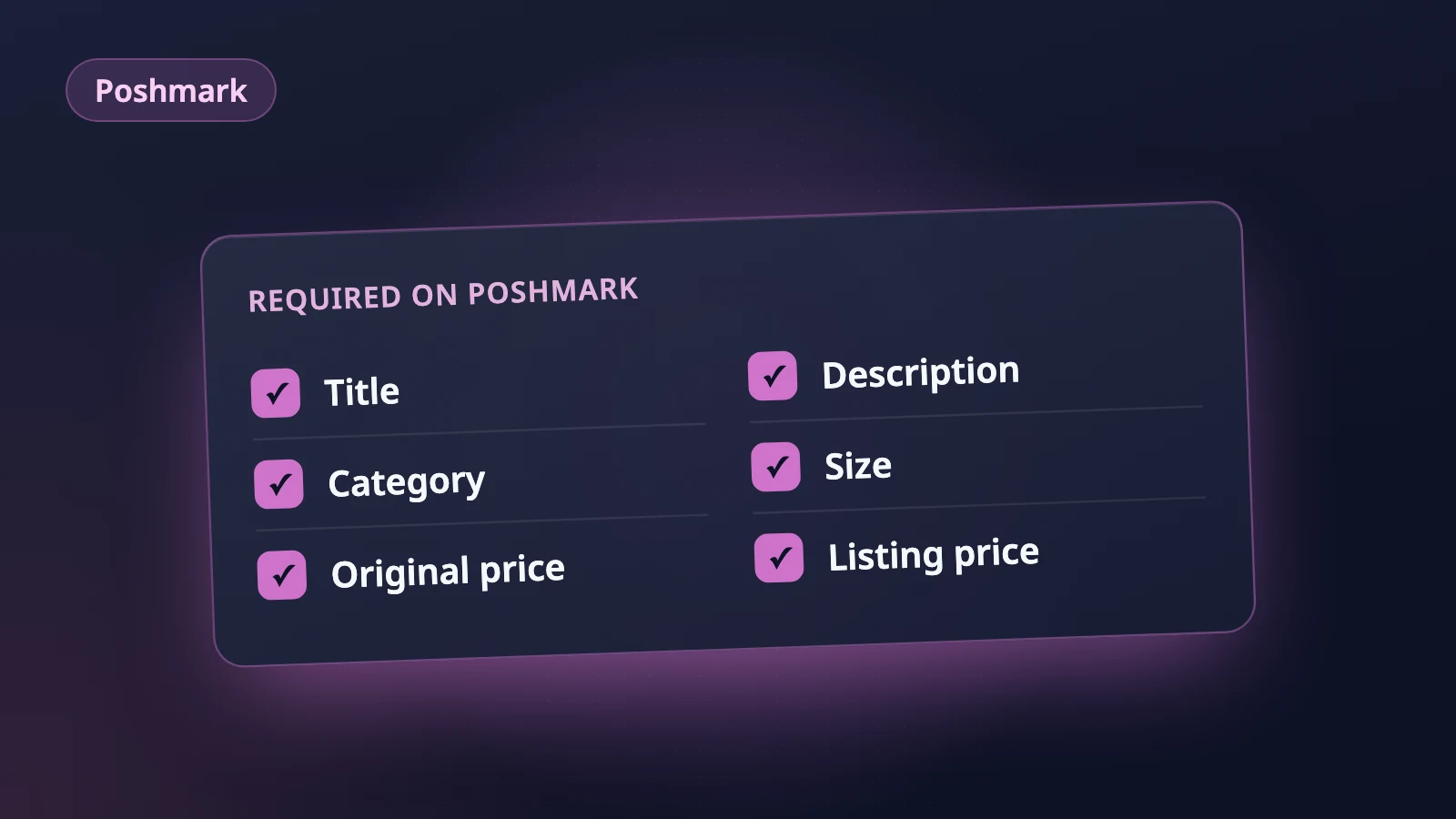
For the rest of the listing (title, required fields, keywords to avoid), see our Poshmark listing tips.
Where Holgo fits
Holgo's Poshmark listing AI writes a Poshmark-shaped listing from your photos: an 80 character title led by brand and item name, and a plain text description with measurements, fabric and flaws, plus the category, size and colors chosen from Poshmark's own lists. You still hold the tape; add the numbers you measured and check every line before you paste it. Poshmark has no listing API, so Holgo never touches your closet: you copy each field into the Poshmark app or site yourself.
Let Holgo write the first draft
Upload photos of an item and Holgo writes the title, description and the details Poshmark asks for. Free credits to start, no store connection and no card.
Sources
The marketplace rules in this guide come from these pages.